When Michael Shapiro started TAPinto, you couldn’t miss him around town. He was president of the Rotary Club, on the board of the chamber of commerce and at any event you could think of around New Providence, New Jersey, a suburb of roughly 14,000 about the distance of a marathon west of New York City.
“If you were in town, you couldn’t go to any kind of function in the town without seeing me,” Shapiro says. “And that’s the kind of presence that you really need to have to establish that reputation and credibility.”
After walking away from a career as a lawyer in the late 2000s, Shapiro committed himself to helping rebuild local news in the communities where he lived. He launched his first three TAPinto sites in New Jersey in October of 2008, simply hoping to help give back to these neighborhoods where he was raising his family. Fast forward 17 years, and he’s built up his organization as a franchise, with 99 TAPinto sites across New Jersey, Florida, New York and Pennsylvania.
TAPinto provides its franchisees with the backend systems and training necessary to run a successful operation. It’s an efficient way to address the loss of local news, and it’s a variation of a model that other organizations have turned to recently as well.
In Medill’s 2025 State of Local News Report, one of the fastest growing categories of new local news organizations was outlets that are part of national networks, like TAPinto.
There are now 853 local news sites across 52 networks providing original reporting, according to the report.
This growth is being spurred by both for-profit and nonprofit news operations, including legacy news outlets that are expanding their statewide footprints. The largest network is Patch, which includes 535 sites doing original reporting. But other networks include Axios Local, with operations in nearly three dozen cities, as well as legacy and early-stage news outlets building state networks like The Salt Lake Tribune, The Texas Tribune and The Post & Courier in South Carolina, to name a few.
These networks come with the benefit of having established content management systems (CMS) and existing backend support. That lowers the barrier to entry for new local newsrooms to pop up in underserved communities.
Can this be an effective model to reach cities and towns that have lost previous local news sources? Perhaps not for just any news outlet, said Shapiro. But those that are well resourced and have the time to meet with community members and understand what brings value to their lives might take note.
In late September, The Salt Lake Tribune announced the launch of a new monthly print newspaper, the Southern Utah Tribune, serving Utahns in Washington County, on the border of Arizona and Nevada. That’s in addition to the organization’s recent adoption of the Moab Times-Independent in 2023 and the launch of a newsletter serving the Cache Valley earlier this year. The Southern Utah Tribune has two reporters and an editor based in Washington County, spearheading the coverage.
Meanwhile in 2024, The Texas Tribune announced its goal of launching a network of local newsrooms across the Lone Star State. This effort had begun indirectly a couple years prior, with reporters in Lufkin, Lubbock, Midland and the Rio Grande Valley and then formally kicked into gear with The Waco Bridge starting up earlier this year.
Both The Salt Lake Tribune and The Texas Tribune pursued these expansions with financial support from the American Journalism Project.
Deep South Today and The Post & Courier are two other examples of this type of newsroom expansion — the former linking publications based in Mississippi and Louisiana under one organization and the latter expanding beyond Charleston, South Carolina into several other parts of the state.
More than anything, The Texas Tribune CEO Sonal Shah added, pursuing these expansions is about making sure people feel understood.
“I think that people don’t want just national news,” she said. “I think we have to recognize that trust has been lost over a period of time and trust takes time to build. The more the journalists are seen in the communities, the more it’s going to feel like this is [the community’s] newsroom.”
And, it’s not necessarily about figuring out how to rebuild a 20-person newsroom for a mid-size city in Texas. Rather, a small group of reporters who consistently show up can make a major difference.
“If you see some of these smaller newspapers, [they have some success] because there were two people in the community writing about something and everybody knew who they were and they could go stop by the office and say, ‘We didn’t like this story,’” Shah added. “But [the reporters] are still at the grocery stores, they’re still at the school picking up the kids. All of that is what we’re looking to do to build that across Texas. … We’re not going to be in every community all the time, but if we are in enough communities and you have enough people, people start to read you with [an understanding that], ‘At least they know my community.’”
Texas is one of the hardest hit states in the nation in terms of losing local news outlets, with 31 news desert counties and another 138 counties with only one news source. Large areas in West and South Texas have little to no local news.
Hyperlocal news across the Garden State
Shapiro never built TAPinto with the same muscularity that outlets like The Salt Lake Tribune or The Texas Tribune have to conduct deep investigations and publish high-level accountability reporting. But with 90 franchisees and nine additional sites, his organization is designed to be a low-cost way to facilitate quality hyperlocal news.
Each franchisee agrees at the start to publish at least one originally reported local news story each day, to be fully objective in their coverage and to follow the Society of Professional Journalist’s code of ethics.
TAPinto also has a content director whose job it is to make sure that each site maintains a baseline of quality reporting. Some franchisees come in as experienced reporters; others come in with far less — much like Shapiro when he first launched the company.
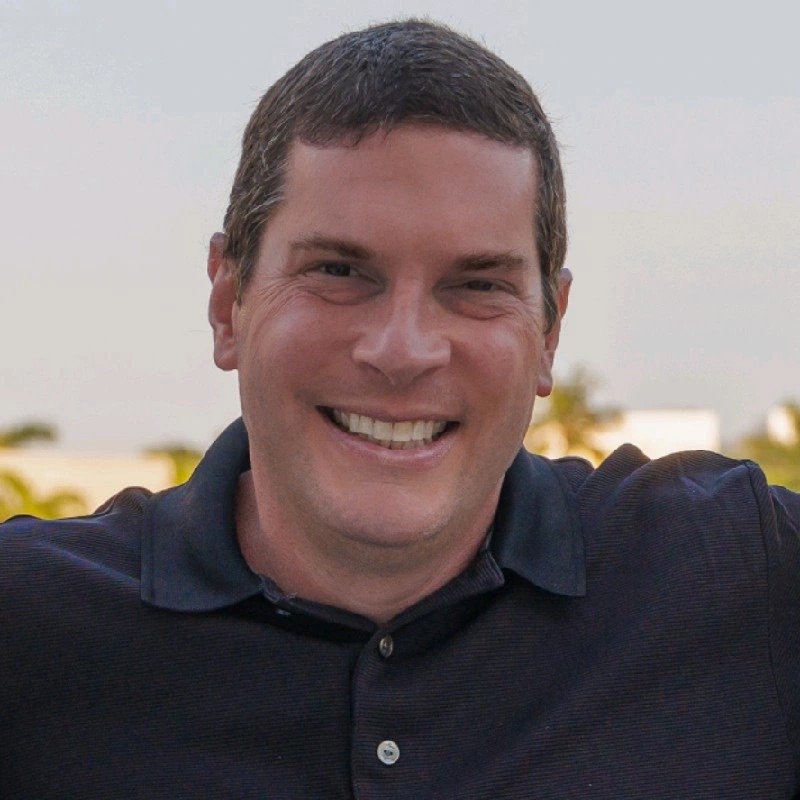
His team holds trainings on everything from how to find good local stories to understanding the business side and how to find advertisers and sponsors. There are lots of moving pieces to manage, but Shapiro said he appreciates the flexibility of his company’s model because there is no one right way to do things, and it allows franchisees to make decisions based on what makes the most sense for their communities.
So, what lessons has he learned from nearly two decades of running TAPinto?
“You really need to nail down your business before you expand to another location,” Shapiro said. “The second thing is, just because you nail down the business in your location doesn’t mean it’s going to work in another location. … And I think all too often what happens is — and this is not just in news — people overextend themselves, and then they wind up diverting resources from their original business, which also has an impact on the original business.”
‘We’re focused on Utah’
First printed in 1871, The Salt Lake Tribune enjoys a sort of legacy that neither TAPinto nor The Texas Tribune (founded in 2009) have. But that legacy means little if reporters just parachute into a community when it’s convenient and leave.

So when the organization, which transitioned to nonprofit status in 2019, started to explore expanding into southern Utah, CEO Lauren Gustus knew the outlet’s focus had to be deeply rooted in Washington County’s communities.
“We want to do journalism for people in southern Utah, and we understand that to be different than what is being done in Salt Lake,” Gustus said in an interview. “The reporters are rooted, they’re making decisions along with their editor about what the highest and best use of our resources are on a day-in-and-day-out basis, and the topics are being driven, the issues we’re covering are being driven by what it is people are telling us they want.”
Along those lines, each of The Salt Lake Tribune’s expansions — into Moab in the eastern region, the Cache Valley up north and now Washington County down south — has remained laser focused on meeting the needs of these different audiences spread across the state.
Simply being willing to listen, Gustus noted, has driven her team’s decision making.
“We are journalists. We are trained to be subject-matter experts, or to at least have the answers,” she said. “And sometimes I think we get into this space in which we think we know best, [but] when we’re entering a new community, we need to enter with humility.”
Building a bridge
Like The Salt Lake Tribune, The Texas Tribune also maintained a hyperlocal focus when talking with community members about what they’re looking for in their local news.
“The Texas Tribune is not always trusted in Waco, let’s be clear,” Shah said. “But when we talked to them about a sort of independent newsroom that was not being told by The Texas Tribune what would be written but would be someone locally from the community that would write about it, people felt comfortable with that.”

There were, and still are, kinks to work out along the way. Kate Myers, The Texas Tribune’s senior partner for strategy and operations, mentioned the challenges that come with working with startups and the unanticipated challenges that often arise. In Waco, for example, The Texas Tribune needed to help secure a lease, marking the first time the organization has had to manage multiple properties.
“Being able to quickly respond to operational and strategic realities on the ground, that’s one of the lessons learned for us because it’s always going to be more work than you expected,” Myers said.
This highlights further why regional expansion might not work for every news organization.
But there’s merit to the concept, said Tom Rosenstiel, the Eleanor Merrill Scholar on the Future of Journalism at the University of Maryland and former executive director of the American Press Institute.
“One of the great questions facing local news operations is whether their markets are large enough to provide them with enough subscribers to be sustainable,” Rosenstiel said. “From a financial standpoint, this could be really significant. It’s just not clear — we don’t have a lot of proof that a metro area of a million people, whether that can sustain a local news organization.”
And, he added, while holding listening sessions is a good start, there’s likely far more work to do to have a clear roadmap for how organizations can effectively emulate what TAPinto, The Salt Lake Tribune and The Texas Tribune are trying to do.
“Listening is helpful, and there’s a lot of research that shows that people appreciate that you did listen,” Rosenstiel said. “But it’s just the beginning of a relationship. It doesn’t sustain a relationship.”
That’s a point that Shapiro, Gustus and Shah have come to understand deeply, underscoring why they’ve invested so much time and energy in approaching their organizations’ expansions as thoughtfully as possible.
Shah also made sure to note that part of trying to figure out how to dig local media out of the deep hole it’s in requires experimentation like this and an openness to learning from each example while continuing to evolve.
“If we don’t offer people an alternative, all we’re going to talk about is what’s not working,” she said. “None of these may work perfectly. Some of these may fail. I hope that we as an industry don’t beat ourselves up when something fails. Failure is a learning. Failure isn’t, ‘It’s never going to work.’ And we have to understand why something didn’t work versus it was a bad thing.
“I hope that we can say, ‘Hey, at least we’re making an effort to try something new and we’re doing something to rebuild trust because we can and people are looking for it, and it may not work.’ That’s just going to be a part of what we all do.”