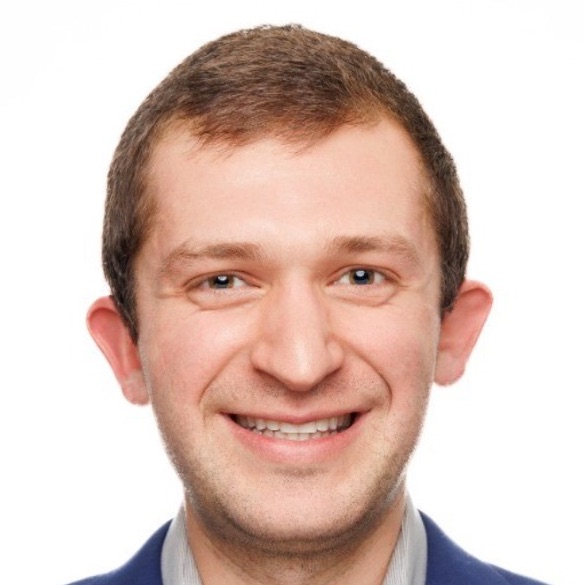
Yukari Kane co-founded the Prison Journalism Project in 2020 with a clear goal in mind: to not only shed light on the experiences of incarcerated people across the country but empower them with the writing skills needed to tell their own stories.
The United States is home to more than 1,600 state and federal prisons. Roughly 1% of the country’s adult population is currently incarcerated, and about one in every 20 people will serve prison time at some point in their lives. These facilities touch every corner of the country, from Charlottesville, Virginia to Taft, Oklahoma to San Quentin, California.
But for millions of Americans, the perspectives of incarcerated people and their families largely live in the dark, isolated from the rest of society. The Prison Journalism Project is among several efforts that now exist to change that.
The nonprofit organization, that relies on contributions from an array of foundations and individual donors, has published more than 2,600 stories from more than 830 writers across the country — everything from a first-person account of a murder that occurred in a facility to how extreme heat and no air conditioning are impacting the lives of incarcerated people.
It’s also partnered with local news outlets, including Charlottesville Tomorrow, a digital, nonprofit, community-focused newsroom in Virginia to help tell some of these stories.
“People who are incarcerated are often not included in the communities that we cover,” said Angilee Shah, Charlottesville Tomorrow’s CEO and editor-in-chief. “It’s [also] important for coverage of our public institutions to include our prisons, and our newsroom focuses on making sure that we focus on and include people most impacted by the issues that we cover.”
“We’re not saying that it’s the complete picture, but they can provide information that you’re just never going to get from the outside,” added Kane, who previously taught at Medill. “Most journalists and newsrooms and editors know that we all need to do a better job of including the community … and what I can say from our vantage point is, try also inviting them to share a part of the story.”
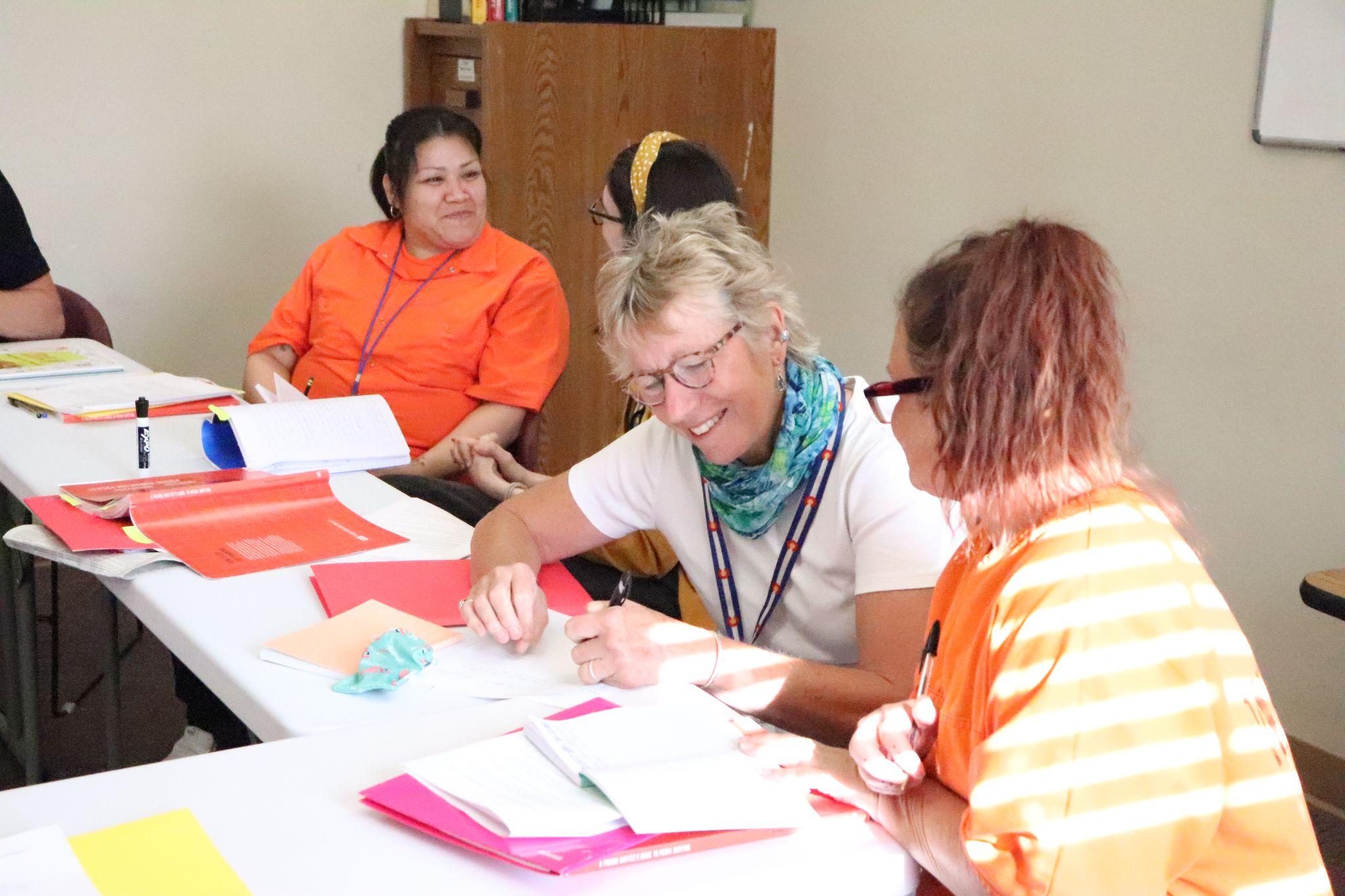
In Oklahoma, that’s even led to the founding of two newspapers run by incarcerated women at the Mabel Bassett Correctional Center and the Dr. Eddie Warrior Correctional Center. The Mabel Bassett Balance and The Warrior Standard have printed six issues each, since launching in 2024. Both serve as vehicles to bring about productive change in these facilities, said Ellen Stackable, executive director of Poetic Justice, a nonprofit serving women in prisons that oversees the two newspapers. Stackable and Kane have worked together on this endeavor.
The two newspapers launched because the small communities where the two correctional facilities are housed didn’t have much local news coverage. Mabel Bassett is about 30 miles east of Oklahoma City, while Eddie Warrior is about 45 miles southeast of Tulsa. In the last two years, both papers have seen stories published in The Oklahoman and Tulsa World newspapers and even The Guardian and The Marshall Project, the former with international reach and the latter reaching across the country.
“The integrity of the publications and the program are really important,” said Hannah Covington, who volunteers with Poetic Justice and serves as co-advisor for The Warrior Standard. “Just seeing this ethos of care threaded throughout both the reporting process, the editing process and how the staff approaches this work, I think journalists on the outside can see that when they come and visit. It’s a delightful newsroom to be a part of.”
‘A known quantity’
For the staff at The Warrior Standard and The Mabel Bassett Balance, it’s been an experience beyond what they could’ve expected. Medill sent a list of questions to Covington and Melissa Antonucci, co-advisor for The Mabel Bassett Balance, who shared them with staff members of both papers and relayed their responses via email.
“It has instilled within me a far greater sense of community than I have ever experienced before, even outside of prison,” said Geneva Phillips, editor at The Warrior Standard. “It has given me a sense of civic responsibility that I could not have conceived of before. It has shown me how a small group of determined people can make a difference.”
Both papers have touched on everything from Q&As with the prison deputies and kitchen recipes to accounts of battling substance abuse and how to prepare for parole hearings. Stackable noted that the depth and variety of the work often draw the most praise.
“Especially for people who are incarcerated, we feel unheard and insignificant,” said Kelsey Dodson, another editor at The Warrior Standard. “When you get involved in the justice system, it is easy to lose your voice, to be silenced, and it can feel as if you have no control over your life.”
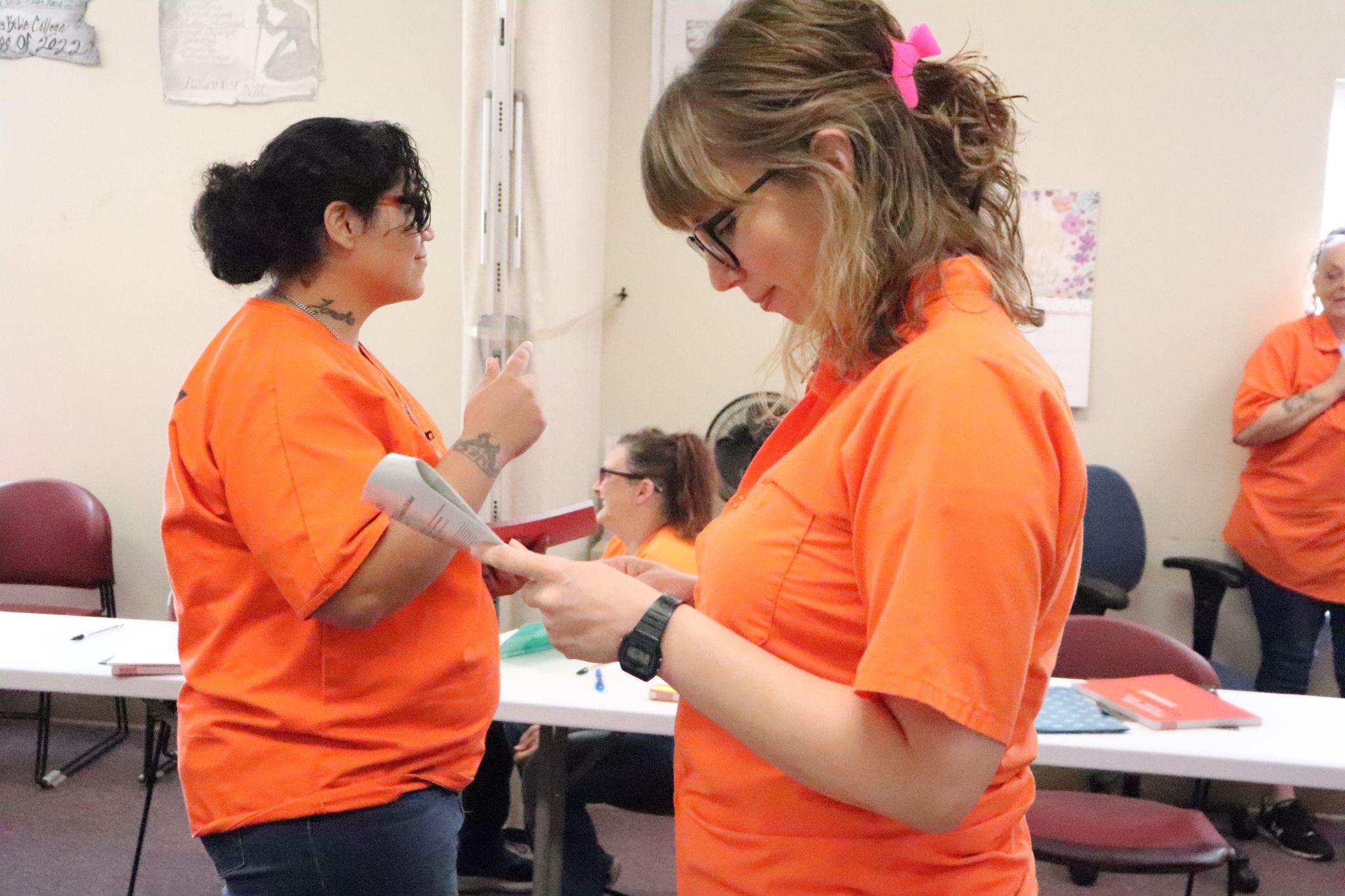
The Oklahoma Department of Corrections does not allow volunteer groups who go to prisons, like Stackable’s team, to offer any sort of compensation to incarcerated people, so the newspaper staffers are unable to be paid for this work. If that ever changed, Stackable said, they would find a way to pay them.
People outside both prisons can become subscribers, and the work has had a wide reach, as evidenced by the re-publication of stories across a variety of outlets.
“We are a known quantity to journalists in Oklahoma now that aren’t in prison, and that, I think, is pretty remarkable,” Stackable said.
“It’s astonishing how the newspaper has formed relationships between the prison population and society,” added Lindsey Smith, editor at The Mabel Bassett Balance. “It has brought awareness, interest and volunteers to those experiencing incarceration and who often feel thrown away. It fills a gap that exists between the incarcerated and the free.”
‘Good journalism’
Candace Williams grew up raised by her grandmother, while her mother shuffled in and out of prison. By the time she was 22, Williams, too, found herself incarcerated. She already had two daughters and a third child on the way. She gave birth to her son while in prison and shared her story with Charlottesville Tomorrow.
Mithrellas Curtis, sentenced to 20 years in prison, has chronicled the more than dozen Christmas Days she’s spent away from her family.
And Antwon Brinson, a chef in Charlottesville, has taught incarcerated students at Albemarle Charlottesville Regional Jail various culinary skills. By the end of his course, they have training and certification necessary to work as a restaurant chef once they’re released.
Sharing these perspectives with the broader region is all part of Charlottesville Tomorrow’s mission to truly be a newsroom that covers all parts of the community, even those who’ve historically been overlooked and ignored.
“We do a lot of community listening, audience surveys and we try to aim our resources at what the communities that we serve say is most important to them,” Shah said. “The issue of incarceration, conditions of incarceration, the laws, the effects on communities, re-entry in particular, are top of mind for communities.”
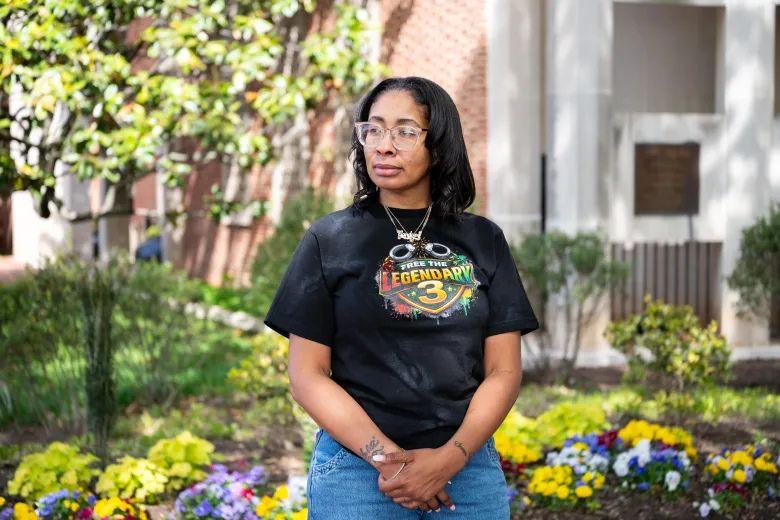
There’s lots more work Shah said she hopes the organization can do to shed light on people who are incarcerated. Many of them grew up in the communities they cover, and many will return upon release, so it’s irresponsible to overlook them, she added.
“I also just think it’s good journalism. If you have issues in your community that involve certain people and you are not talking to those people directly, your journalism isn’t as strong,” Shah said.
It’s a theory that others have adopted as well. The Northwestern Prison Education Program recently graduated its second cohort of incarcerated students in April. During their time, they had the opportunity to learn from Medill professors and take classes in opinion writing, criminal justice writing and documentaries.
Meanwhile, at the Prison Journalism Project, Kane hopes to continue to expand the organization’s work to collaborate with outlets like Charlottesville Tomorrow and Poetic Justice to tell these stories.
“I’ve been able to see in real time why journalism matters because it changes how people see their situation,” Kane said. “It changes their understanding of their environment. It brings up issues and stories that would never come out otherwise.”
And notably, those who’ve participated in these projects as incarcerated journalists independently echoed Kane’s sentiment.
“When I write about who I am and what I go through every day I feel human again,” said Crystal Avilla, editor of The Mabel Bassett Balance in Oklahoma. “Most people don’t take the time to see or talk to us in person, but they’ll read the words we write, even if it’s just out of curiosity. It’s my hope that through that simple interaction they realize we aren’t just one day, one mistake. That we are, in fact, people who feel and dream and strive to be better than we are.”