Few local news organizations embody what it means to be part of their community more than Village Media.
The Canadian media company is relentlessly focused on the communities it operates in, even if that means pushing the boundaries of some journalistic norms.
When a local food bank in Sault Ste. Marie, Ontario had run out of food, the local Village Media outlet SooToday organized a fundraiser to help replenish their store and ultimately raised enough money to provide more than 8,000 meals. When the local YMCA needed a financial boost, SooToday organized a campaign to encourage people to buy memberships.
The organization’s Random Acts of Kindness program even recently delivered a truckload of summer gear – from scooters and skateboards to basketballs and footballs — to children.
And when key political issues come up, Village Media organizes events with local institutions to bring elected officials, stakeholders and community members together to address the problem.
It’s all part of Village’s “community operating system” mantra, and the organization is on a mission to spread it in the United States. In July, the Knight Foundation, one of the philanthropic organizations at the forefront of funding journalism, announced it was investing $5 million to help Village Media launch 15 newsrooms in the U.S.
“I think a problem in the news industry today, if I can say this delicately, is we spend too much time looking backward at how we create what worked in the past, versus looking forward at what our societies need today,” Richard Gingras, the former global vice president of news at Google who’s the chair of the board at Village Media, said in an interview with Medill.
Village’s ethos in some ways counters what Gingras calls the “Woodward-Bernstein effect” — a reference to Bob Woodward and Carl Bernstein’s investigation into President Richard Nixon during the Watergate scandal, and a relentless focus on holding power to account.
“That’s obviously important, I don’t want to dilute that at all,” Gingras added. “But I look at that and I say, but if we really want to accomplish that, don’t we need to step back and look at it in a larger frame?
“When I look at what Village is doing, that core mission says, ‘How do we empower communities to address their own challenges and opportunities? How do we not only give them the information they need — the classic journalistic solution — but create opportunities and frameworks for the community to come together and address their own opportunities and challenges?’”
Village currently serves 27 communities in Canada and is headquartered in Sault Ste. Marie. In some of the communities it’s been in the longest, it sees roughly 25% of households engaging with its content on a daily basis. It plans to launch its first cluster of newsrooms in Wisconsin, with more in downstate Illinois and central Pennsylvania to follow within the next year.
Notably, the Knight Foundation will own 50% equity in each of these 15 organizations, an evolution from prior funding initiatives, like Press Forward.
“We’re at a stage where we feel like if there are replicable, proven business models that can be scaled out, then we should help make that happen,” said Amalie Nash, Knight’s vice president of journalism. “We all know the crisis in local news; the crisis continues to deepen. We’re all very laser focused on what some of the solutions are, and so if you’ve identified a company that has succeeded in a place like Canada, can that be repeated in the United States to such a degree?”
It’s a pertinent question to ask Village founder Jeff Elgie.
“I have no reason to believe it won’t [succeed],” he said. “There’s nothing to me that won’t work the way it works here.”
Community identity
There are years of data and experience to back up Elgie’s intuition. For example, the company always maintains a specific ratio of journalists and sales team members to residents, and Village targets geographic clusters to allow business staff to spread across multiple markets.
In the U.S., Village is targeting Appleton, Wisconsin as its first newsroom, with other planned Wisconsin newsrooms in Sheboygan, Fond du Lac and Oshkosh. In Illinois, Village is currently planning on launching sites in Peoria, Bloomington, Champaign, Springfield and Decatur; and in Pennsylvania, its sights are set on Altoona, Johnstown, Indiana, Somerset and Huntingdon.
But with a deliberate process, some of these locations could change. The current selections are all small or mid-sized cities, with none housing populations of more than about 115,000 people in the cities proper. Several are home to state universities and legacy news outlets.
“Does it have a real sense of community identity? Does it fit within a certain size range? What does the competitive digital product look like from a news standpoint?” Elgie said are some of the key questions they ask as they plot where to launch. “You go and you meet the key community stakeholders — the head of the downtown association, the head of key community groups like a rotary or a business association and you get a sense as to how people participate in their community, and how they feel like it’s a distinct place that they care about.”
This level of detail is something that’s endeared Village to Knight’s decision makers.
“What I really like about it is that they are partnering in communities, they’re helping to fundraise. They’re really becoming part of a community,” Nash said. “They’re identifying where their model works well, which I think is very important. Not all communities are going to be a Village Media community, and that makes sense. … As much as we want to see journalism thrive in every community, you have to have the right conditions for that to happen.”
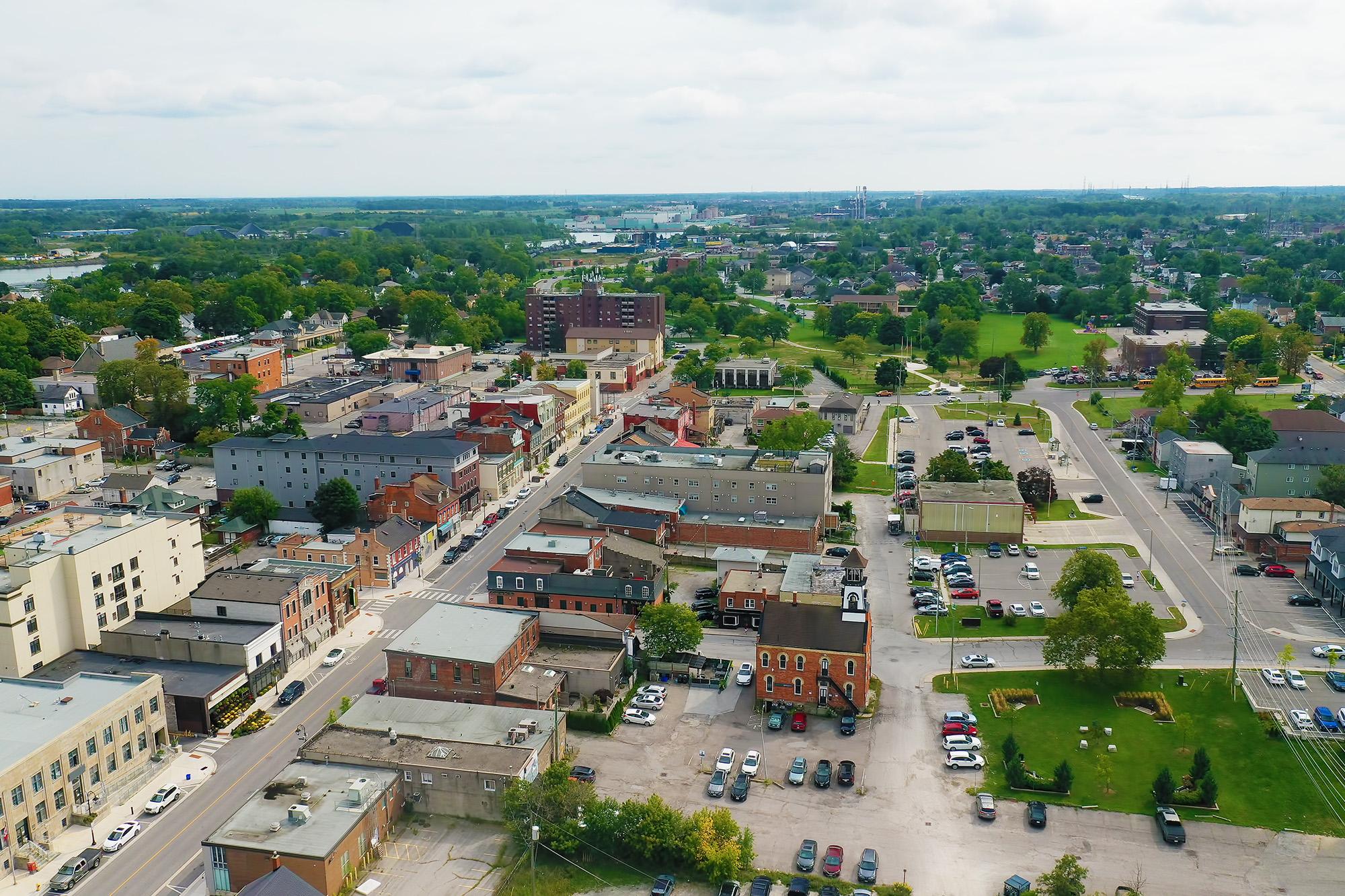
For example, Village doesn’t typically consider communities that are true news deserts, with no formal sources of local news, as attractive options. Without a built-in news consumption habit, the organization’s model has a low probability of succeeding, Gingras noted. There also needs to be a robust business presence to support the organization’s advertisement-centered business model.
Village Media isn’t deterred by the presence of existing media, either. Appleton, Wisconsin is already home to the USA TODAY Co.-owned Post Crescent. But it sits behind a paywall, whereas Village Media provides free access to its content.
Village also features a community interest platform called SPACES — think non-toxic Facebook group.
These groups don’t have a section for politics, often the culprit for community groups going off the rails. Rather, they focus on community-building topics like gardening, music or even classic car collecting.
A classic car group started with just a handful of people, Gingras said. It’s since grown to over 600 people and their community now holds vintage car shows in Sault Ste. Marie every year.
“It’s not going to be this rocket ship of Facebook-like traffic, but maybe it’s going to be this high-quality, safe, non-toxic environment where we can actually bring people together in the real world,” Elgie added.
This comes as Village recently announced a partnership with OpenAI in Canada to launch Open Door, a community health and care navigation platform powered by AI that will allow users to search for resources like food assistance, health care or housing. Village developed the tool with OpenAI’s assistance and will oversee all editorial decisions related to the tool.
A real impact
As Elgie and his team scope out what’s next, he said the biggest obstacle is identifying the right talent to join their team.
“We always talk about talent being probably the number one barrier to us scaling more quickly,” he said.
But, there’s hope that as Village gains more name recognition in the U.S., that will help their cause.
Then there’s the question of Knight’s involvement. When will the organization look to sell its 50% equity stakes? How much revenue needs to be coming in? Who would the ideal buyers be?
It’s too early to know the exact answers to any of those questions, but Elgie has an idea of what he’s hoping for.
“Somewhere after 24 to 36 months, we bring the cluster up to sustainability, so it’s cashflow profitable, and at that point, Knight would find, in our hopes, a local investor that wants to participate in a news organization,” he said. “If between months 24 to 36, we’re able to say, ‘Here’s an investible business…,’ imagine that in the news industry — ‘Here’s a business that can make some money and also have a real impact in your community.’”