There’s no shortage of reasons why Chris Carr loves high school sports — the community, the joy and the camaraderie, among them.
For 25 years, he’s worked at the Minnesota Star Tribune, mostly in the sports department, and now he’s helping lead the way for the paper’s latest endeavor: Strib Varsity, a high school sports desk that not only writes stories but tracks stats and scores and broadcasts live streams for hundreds of schools around the Land of 10,000 Lakes.
“We know that high school sports in some towns — big, small, medium — is a center of gravity on some nights in many ways,” said Carr, the Star Tribune’s director of high school sports.
It’s an investment of massive proportions, particularly considering that the Washington Post just laid off over 300 journalists, including much of its sports staff. Glen Taylor, the Star Tribune’s billionaire owner, is taking things in the opposite direction. Strib Varsity currently covers 32 sports, 13 of which include comprehensive stats and scores for teams and players.
This all launched officially last August, but the buildup to this point has come through decades of work. Before its current form, the Star Tribune’s high school sports coverage housed various “hubs,” with stats and scores available to coaches, athletes and parents.
With high-quality journalism added to the stats and scores, this helped establish a highly engaged audience and subscriber base. So, moving to this next phase was a worthy investment, said Sydney Lewis, an associate product manager at the Star Tribune who’s helped lead the Strib Varsity initiative on the product side.
“I do think high school sports in general is a winning opportunity for a lot of local newsrooms,” she said. “The question is, at what scale? Ours is probably on the extreme end of the scale of what you can do with high school sports.”
Extreme might even undersell it. All told, the paper covers roughly 500 high schools — all that are in the Minnesota State High School League — and livestreams games as far as four hours north of Minneapolis and two hours south on the Iowa border.
This is all done with the help of a full-time editor managing roughly a dozen freelancers who make up the stats team, along with six full-time reporters and two additional editors. Strib Varsity also partners with another company to stream events on their website, and Carr estimates they could broadcast over 300 games this school year.
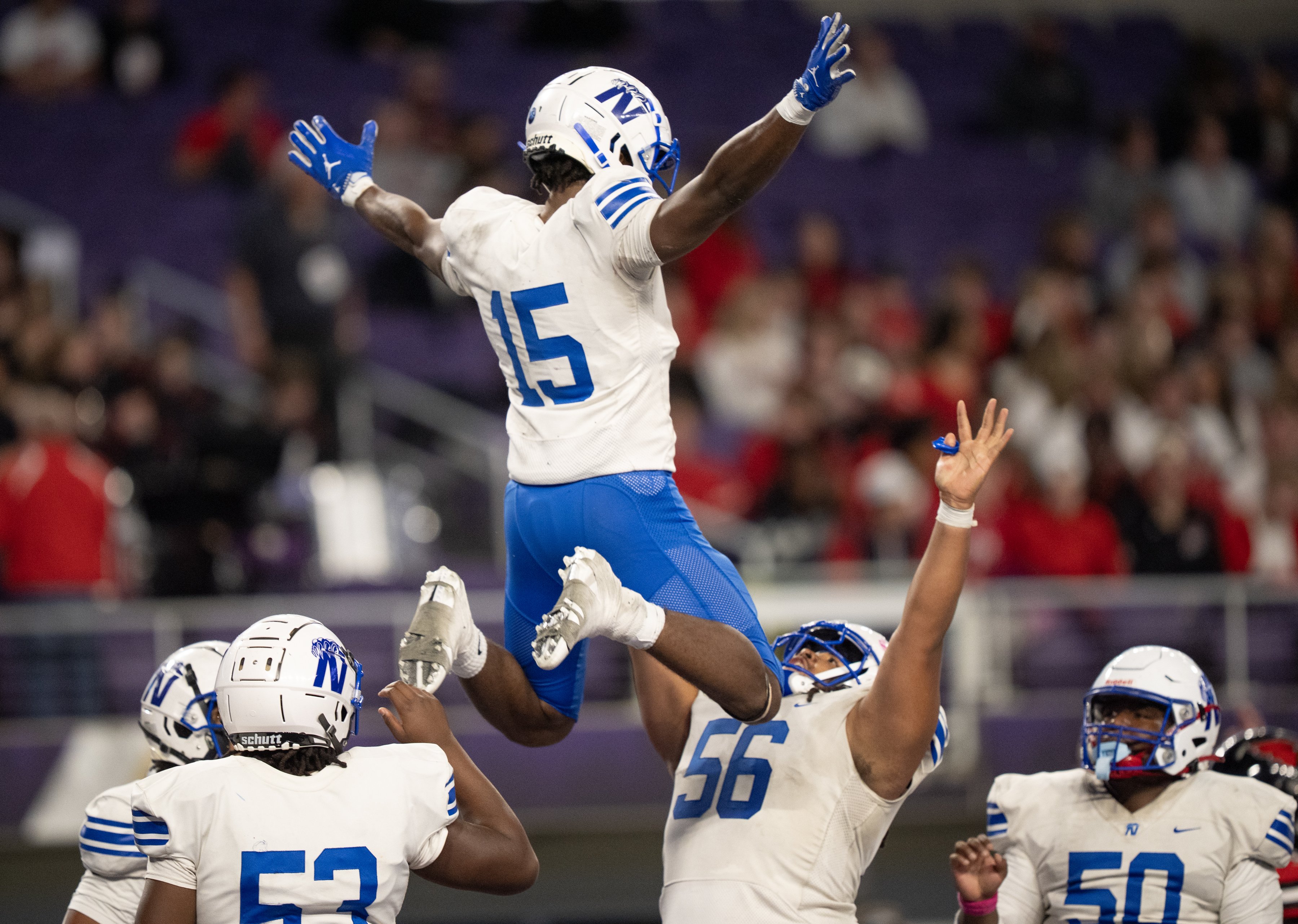
Since launching in August, Lewis said that 10% of total new subscriptions to the Star Tribune have come through Strib Varsity — which is offered as a separate subscription from the rest of the organization’s content. And, Strib Varsity’s paywall is converting about three times as many people to paid subscribers as the main Star Tribune paywall. An annual subscription, which grants full access to all offerings, costs $250 per year.
There’s still lots more work to be done — Lewis said they’re still experimenting and investigating new possibilities, some of which will launch later this year. But one thing is clear: The Star Tribune is as all in on high school sports as any news organization could be.
“Some of the best stories that are out there in sports are in high school sports,” said Carr. “It’s the best access. Some of the charming stories, or heartwarming stories or just stories soaked in emotion are in high school sports. … There are just some gems out there. Dang near every team in the state probably has a story worth telling, and we try to get to as many of those as we can.”
The more local, the better
A similar philosophy has guided MassLive, a digital Massachusetts-based publication part of the Advance Local portfolio, which also has invested heavily in and started to scale its high school sports coverage.
Leaning on past experience working for the NCAA, MassLive’s Vice President of Content and Executive Editor Ronnie Ramos sees clear room for growth.
“A big part of it is a community connection — the more local you can get with readers, I think the stronger the connection,” Ramos said. “It’s content you can’t get anywhere else unless you’re watching the local news at 11:27 or whenever they do the 90 seconds of sports roundup. You might get to see something, but otherwise it’s very hard to get real information and results on players. And, people will pay for it. It’s content they value, and it’s an important time in people’s lives.”
MassLive currently covers 95 teams throughout the state and plans to launch livestreams in the near future. This continues an expansion from western Massachusetts into the Boston area, while this fall will see added coverage around Worcester in central Mass.
Ramos also aims to incorporate a high school version of NFL RedZone, the weekly football show that highlights every touchdown scored across the league on Sundays, into MassLive’s offerings, building on work he did at the Indianapolis Star.
“I think you just look for opportunities to provide content that readers can’t get anywhere else,” he said. “Especially with high school sports, I think video is a huge opportunity.”
MassLive’s subscription setup is different from the Star Tribune’s — the former doesn’t have a separate subscription offering for only high school sports. But, it’s still been a massive driver of new supporters: Ramos said about a third of new subscriptions came through high school sports in 2025. The outlet also has a hybrid subscription model, so some of its content is available for free.
‘Any investment in high school sports is a good thing’
With most local news organizations operating on shoestring budgets and with nowhere near the capacity to operate at the same scale as the Star Tribune or MassLive, it might seem daunting to try replicating anything either organization is doing.
But there are lessons to take away, said Len LaCara, currently the strategic analytics manager for the Marshall Project who previously helped facilitate high school sports coverage for news organizations at Gannett and Lee Enterprises.
“It can be done successfully with one or two reporters in a way that doesn’t break their spirit or force them to work 100 hours a week,” he said.
“I think any investment in high school sports is a good thing because it’s something around which most communities — it’s part of their personal identity,” he added. “You see that across Minnesota, you see that in western New York and West Virginia and Missouri and everywhere else where there are concerted efforts to understand what’s going on in communities; they rally around their high schools.”
When he worked with the Rochester Democrat and Chronicle, LaCara said they’d publish “all-greater Rochester sports teams” that, once behind a paywall, drove a huge jump in subscriptions.
Covering the high schools in aggregate, with preseason players to watch, midseason surprises and tournament previews, can all help reach a wider audience and drive interest. The biggest key: providing content that’s not easily accessible elsewhere.

That idea of differentiation is also supported by the work of Ed Malthouse, the research director of the Medill School’s Spiegel Research Center at Northwestern University. He co-authored a paper about the importance in product differentiation for local newsrooms to build subscriptions and emphasized that offering this sort of unique content is vital, particularly as newsrooms have to pivot away from advertising as a major revenue source.
The importance of high school sports has also caught the attention of Chuck Todd, the former anchor of NBC’s “Meet the Press.” In a 2025 interview with Medill, he argued that high school sports is the most sustainable stream of revenue for local newsrooms, a point he’s made numerous times.
This increased discussion has Carr optimistic that Strib Varsity’s investment will continue to spark conversation and experimentation across the country, albeit at different scales.
“If you’ve got a couple of reporters and an editor, there are things you can learn from Strib Varsity about what type of content connects with communities, how to give the small school just as much real estate as the big school in some ways,” Carr said. “I think Strib Varsity is probably going to give sports editors and editors and newsroom leaders a reason to have a fresh conversation about how to use the resources that they have in their sports department.
“But this is not something that you can turn around from January to February and start up. It just isn’t. At least not at the level that we’re trying here.”
Caretaking
So where does Strib Varsity go next?
Lewis said athlete pages will be added to the mix, with season (and ideally full career) stats available for different players. They’ve also discussed build-your-own tournament brackets that subscribers could access ahead of state playoffs. And, there’s hope that some of the tools Strib Varsity uses will be transferable to other parts of the organization.
“What does the food/culture version of Strib Varsity look like? What does the politics or election version of Strib Varsity look like?” Lewis said. “Those are things that are a little bit further out because we definitely want to make sure the foundation on Strib Varsity is really, really solid before we try to replicate the success of it into other areas.”
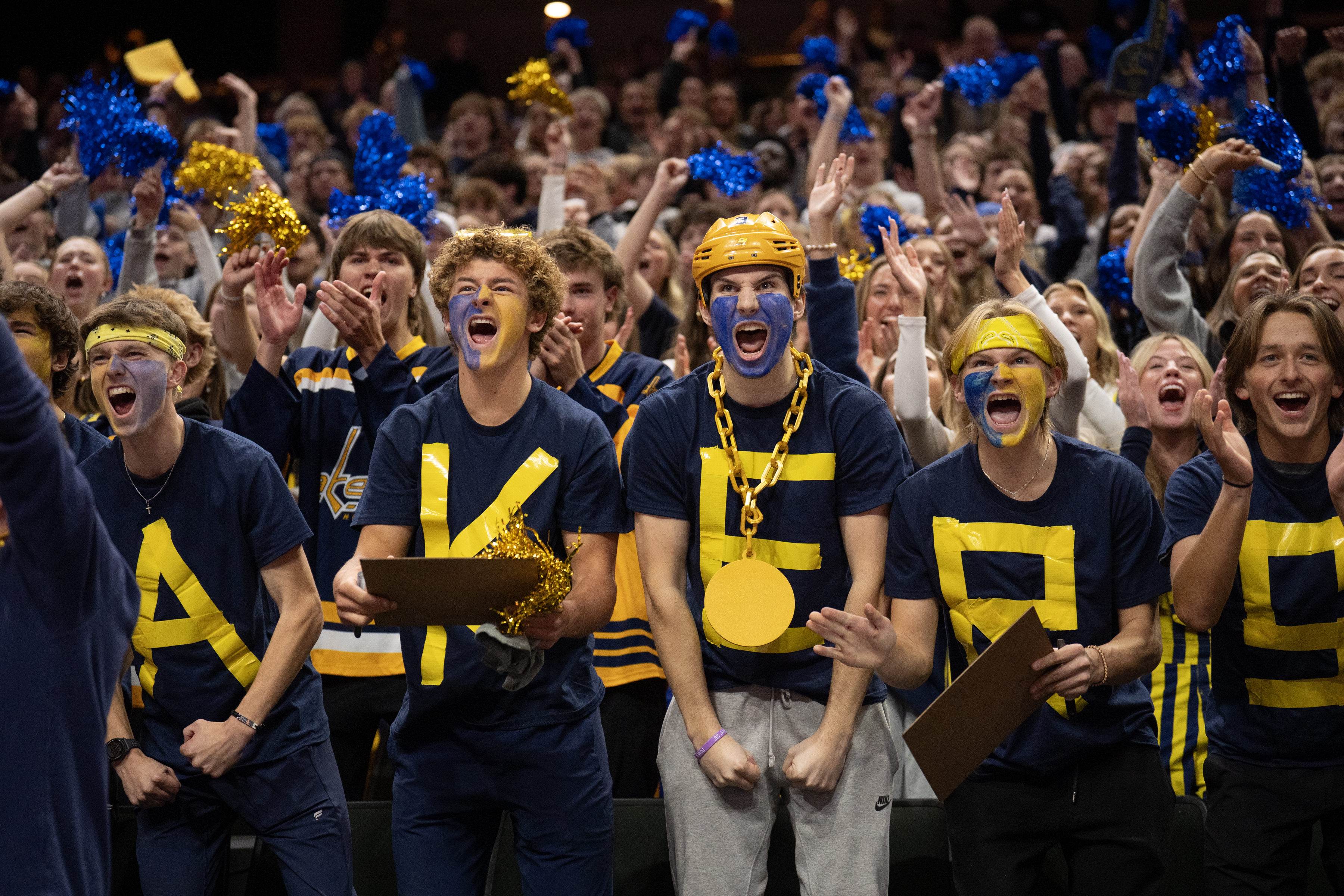
There are also the longer-term impacts for the Star Tribune to consider. While a 15-year-old basketball player might not buy a subscription to Strib Varsity, their recognition of the brand could go a long way to keeping the organization alive for years to come.
“The relevancy of the Star Tribune is something that needs caretaking,” the 49-year-old Carr said. “I grew up in the Twin Cities. There were newspapers all over the driveways in my neighborhood. When I got to school, there were newspapers in the school library. If we went somewhere for dinner, there’d probably be a newspaper rack in front of the restaurant. That was plenty of years ago. Different times … but if we can connect with teenagers and have them care about the Star Tribune and care about Strib Varsity, there are benefits there that are hard to measure, but in my mind are hugely valuable and important for the Minnesota Star Tribune brand.”