In another era, Long Islanders fell asleep hearing the frantic commercials for Crazy Eddie (“His prices are insane!”) and the dry humor from Coronet’s Furniture (“No talking orangutans”) on their TV sets; they spent their summers in share houses on Fire Island and enjoying ice cream sundaes at Jahn’s; they celebrated birthdays at United Skates; and they flocked to clubs to see musicians, from reggae icon Jimmy Cliff to Long Island-native rock-and-roll pianist Billy Joel.
For many, those memories are still vivid decades later. And for Newsday, the daily New York newspaper serving the largest island in the contiguous United States, recounting these stories of nostalgia for their readers has turned into an unexpected find — like discovering a gold bracelet with a metal detector on Jones Beach.
The experiment began more out of necessity than anything else. During the pandemic when people were often stuck at home, Newsday devoted space to reminisce about better times. They’d dabbled in nostalgia stories previously, but this proved to be a turning point.
“The enthusiasm we got … the reporters who wrote those stories would get emails from readers who wanted to share their memories of going to that specific beach when they were growing up or going to that diner that had closed,” said Shawna VanNess, Newsday’s associate managing editor. “And it really just took off from there.”
Now, the publication aims to publish at least one nostalgia story a week, aware of how much reach they tend to get. With an active push toward building up their digital subscriber base, this nostalgia beat has moved the needle.
According to VanNess, a nostalgia story often generates two to three times more new digital subscribers than their average story. They also tend to generate lots of chatter in different Long Island Facebook groups where reporters will ask people to send in their favorite memories of a particular topic and then share their published stories in these groups.
“It’s been a fantastic flow of getting new sources,” said VanNess. “Then we post the story in those groups when it’s done, and it really helps the metrics grow because we’re sharing it with a whole new audience.”
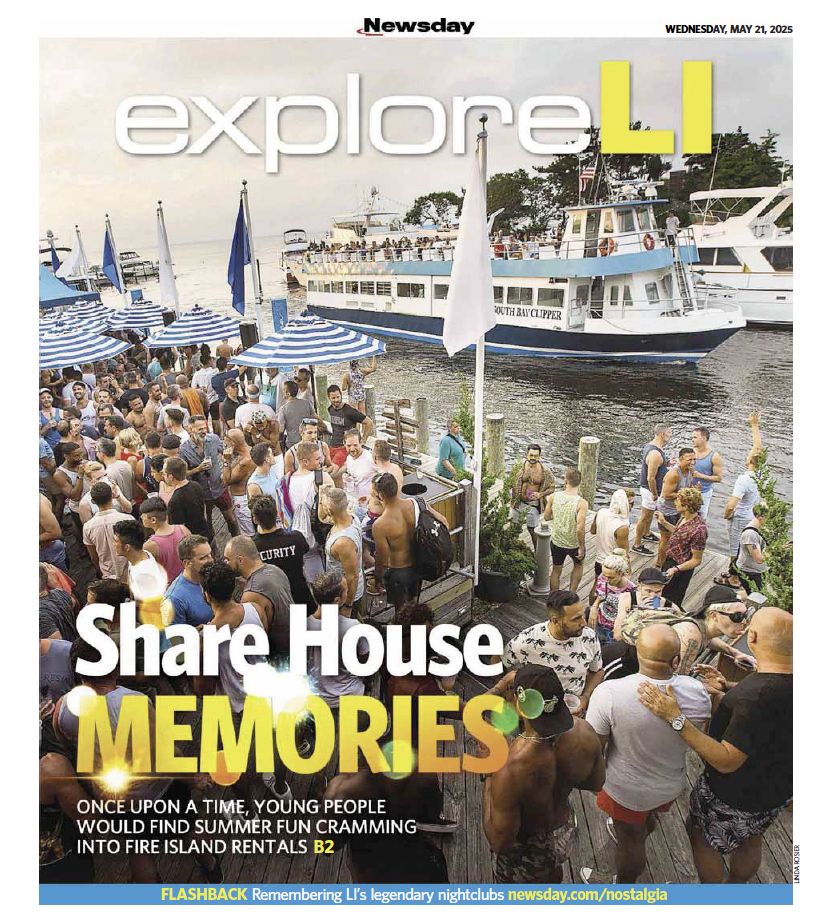
This isn’t an asset that’s unique to Newsday. At least, it shouldn’t be, noted Emily Ristow, the director of journalism strategy for the American Press Institute.
“I think this idea of leaning into local history, local identity is a really strong one for news organizations, especially legacy organizations that have a lot of archives to draw from, whether it’s images, stories, videos,” she said.
“I think what Newsday did in terms of paying attention to their online data and looking for some outliers there that might speak to some different strategies and testing some things out is a really good idea.”
The Nostalgia King
Perhaps no Newsday employee is a better fit for a nostalgia beat than entertainment editor Andy Edelstein, who’s worked there since 1989 and who’s lived through much of this Long Island history.
“Being the senior member of the entertainment team, the one who actually went to these places and lived through this, almost by default, that makes me sort of like the nostalgia king,” Edelstein said during a phone interview. “It’s a title I wear proudly.”
Among his favorite nostalgia stories: a look back at Jahn’s ice cream parlor. The chain, founded in 1897, was ubiquitous across Long Island and the New York metropolitan area. With just one location remaining in Jackson Heights, Queens, Newsday published a retrospective of its history.
“I think on Facebook it got something like 700 comments, which is really amazing,” Edelstein said. “The secret to this is really realizing that people like to see places that they associate with from their lives. As a Baby Boomer, I tend to focus on those [stories], and I think a lot of Newsday readers are in that over 40 cohort, so I think it really responds to them.”
“You’re not reading these types of articles anywhere else,” he continued. “They truly are only a Newsday proposition.”
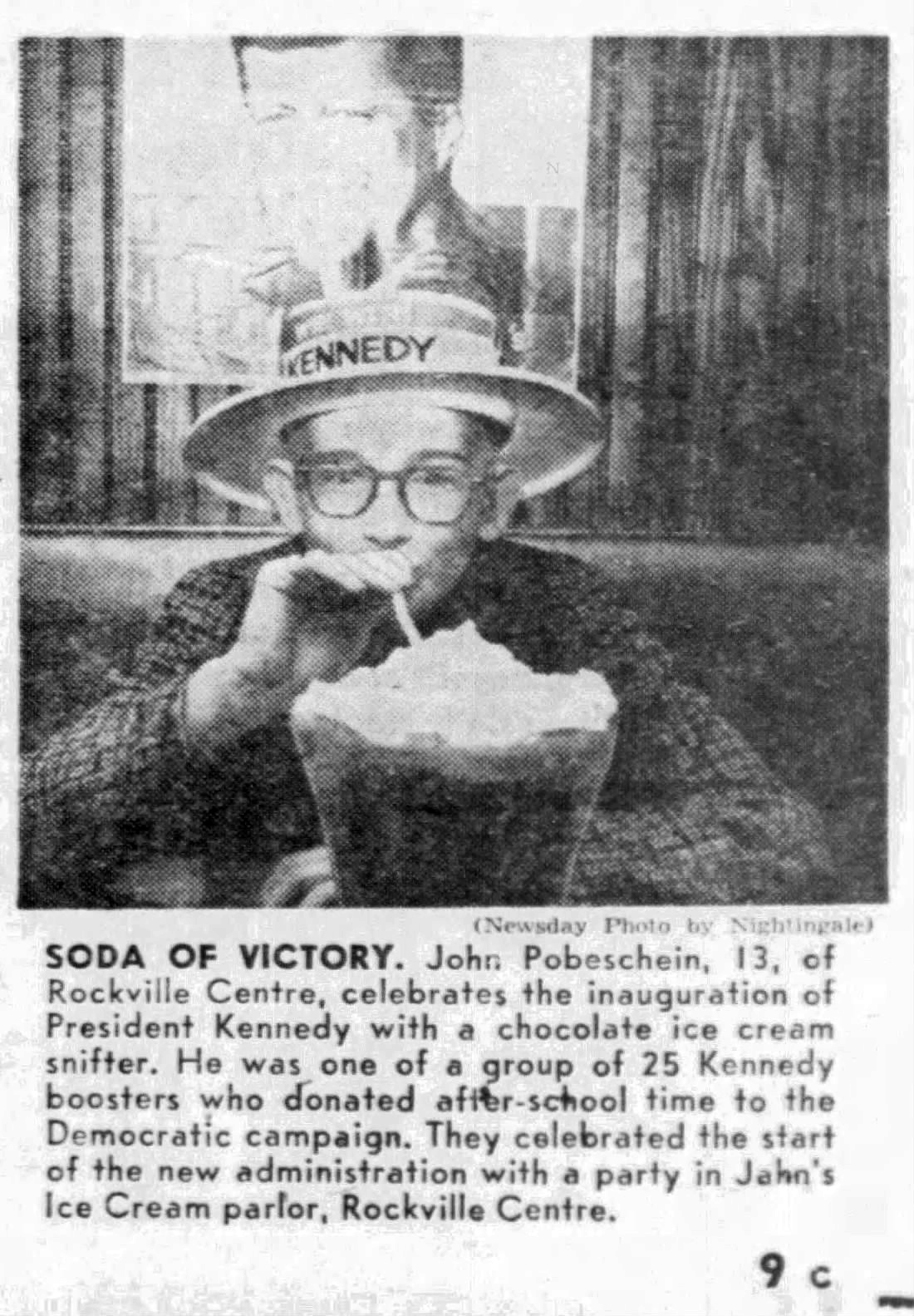
They’ve run other stories, too, like one about the Long Island Arena in Commack closing and “Whatever happened to…?” stories about former long-time local TV anchors and meteorologists.
“Now I know, without trying to sound too cocky or arrogant, that if we run one of these nostalgia stories, the metrics should be very good,” Edelstein said.
Low-hanging fruit
Surely Long Island isn’t the only region in the United States with a rich history that evokes feelings of nostalgia from its long-time residents. So can this be a more widespread strategy local news outlets add as part of their coverage?
Absolutely, said VanNess.
“This is low-hanging fruit,” she said. “Other newsrooms could take a look at, what are the longest running venues and businesses that have withstood the test of time and the shifts and evolution, and what is the backstory there?”
Experiment with some of these types of stories, measure their traffic and popularity and see if it can become a scalable model, she added.
But while Newsday’s found success turning back the clock, the organization is also aware that many of these past experiences might not have been accessible, or even relevant, to some readers.
“Nostalgia is largely great, good, wonderful fun, but we also know that history has not always been kind to everyone over the years,” VanNess said.
On Long Island, for example, urban planner Robert Moses rammed highways through neighborhoods of lower-income residents and built up Long Island’s beaches to be accessible by car — with low bridge overpasses on the parkways preventing buses from driving on them.
Thus, what might’ve been a great memory for one family visiting Fire Island with access to a car might also be a painful reminder to others of a past that deliberately marginalized segments of the population.
“The good old days weren’t good old days for everybody,” said Ristow. “So yes, I think that could be another challenge for folks looking to adopt this strategy.”
Still, it helps to have someone like Edelstein around who’s lived through so many of these more positive historical moments — or who at least can appreciate them and understand why they’d be of interest to a more diverse audience.
“Newsrooms should have someone on staff who has a deep sense of the area’s history,” Edelstein said. “Obviously the person doesn’t have to be someone who grew up there and is older, but someone who appreciates the historical aspect of things.”
With a widespread interest in history on the rise and the proliferation of negative news coverage, Newsday’s nostalgia beat brings its readers back to a time that, at least in hindsight, seemed so much simpler.
“There’s so much going on in the news cycle that is intense, upsetting, important, negative,” VanNess said, “that for us, nostalgia has kind of been a bright spot to take people back to something that they feel really passionate about, and that’s really important to them in a really positive way.”